


D2C Loyalty Program Case Study: How a Cosmetics Brand Increased Repeat Purchases by 3×
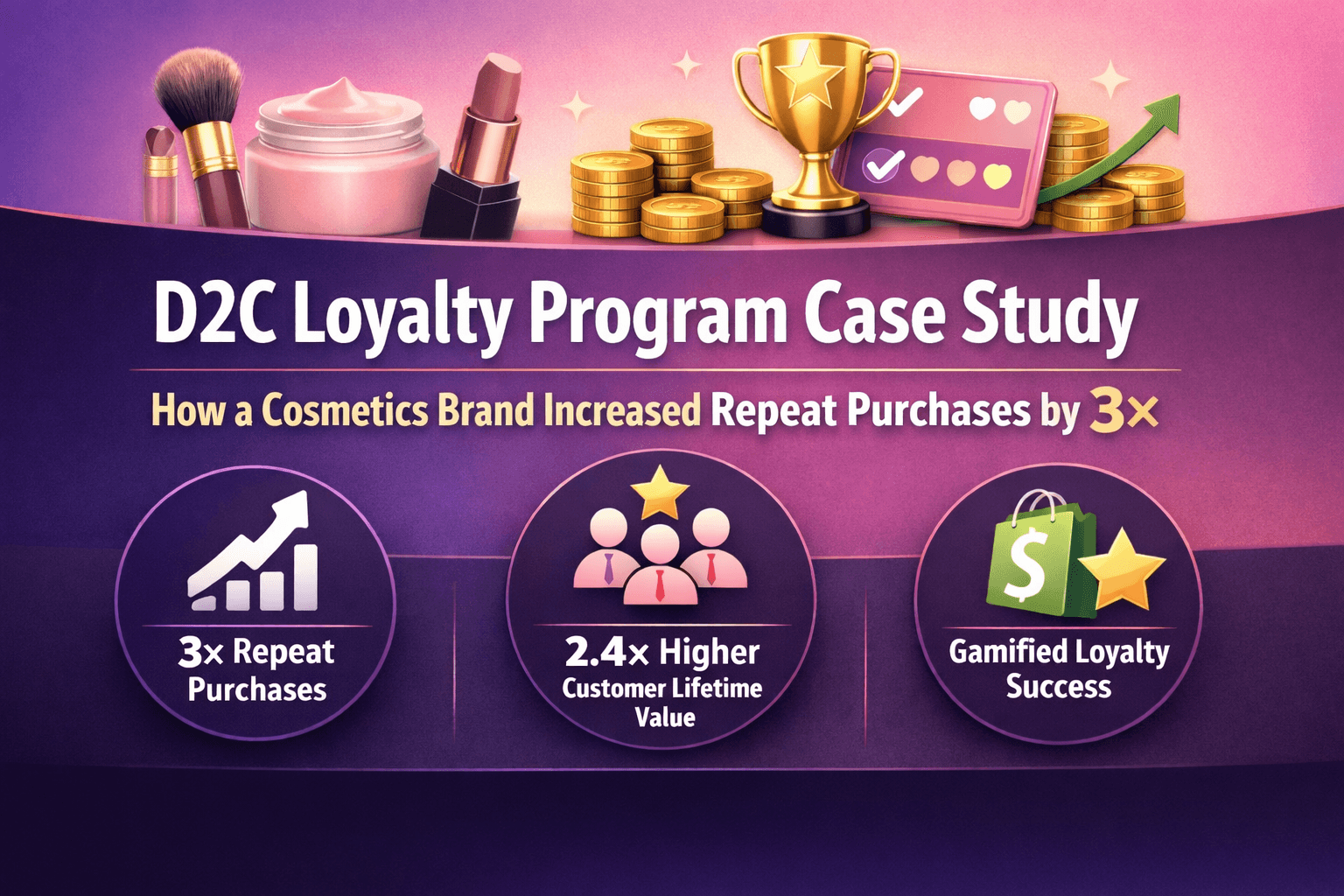
In this D2C loyalty program case study, we explore how a fast-growing cosmetics brand transformed customer retention using a gamified loyalty strategy. While the brand had successfully scaled customer acquisition through digital advertising, repeat purchases remained low.
Within 90 days of launching Reward Rally’s loyalty platform, the brand achieved:- 3× increase in repeat purchase rate
- 73% enrollment among first-time buyers
- 2.4× increase in customer lifetime value for loyalty members
- 4.2× higher purchase frequency among enrolled customers
This case study demonstrates how a structured D2C loyalty program can turn one-time buyers into long-term brand advocates.
About the Brand
Industry: D2C Beauty & Cosmetics Growth Stage: Fast-scaling digital-first brand Platform: Shopify Goal: Increase repeat purchases and customer lifetime value
The brand had built strong visibility through Instagram ads, influencer collaborations, and Google Shopping campaigns. Customer feedback was positive, and product quality was high.
However, customer retention remained a challenge.
The Challenge: Strong Acquisition, Weak Retention
Like many D2C brands, this cosmetics company relied heavily on paid acquisition to drive growth. While new customer inflow was steady, repeat purchases within a 90-day window were only 8%.
Key Problems Identified After the first transaction, there was no structured system to re-engage customers. Email campaigns had declining open rates, and there was no compelling reason for customers to return.
Rising Customer Acquisition Costs Paid media costs continued increasing. Without a high repeat purchase rate, profitability became increasingly dependent on ad spend.
Ineffective Discount Strategy Generic discount codes attracted price-sensitive buyers but did not build long-term loyalty. Revenue spikes were short-lived.
The brand needed a scalable D2C loyalty program that could drive retention without eroding margins.
Baseline Metrics Before the Loyalty Program
Before implementing Reward Rally, performance metrics were:
- Repeat purchase rate (90 days): 8%
- Orders per customer (12 months): 1.2
- Revenue contribution from repeat customers: 18%
Customer behavior was transactional. The brand needed to create habit and emotional engagement.
The Solution: A Gamified D2C Loyalty Program
Reward Rally introduced a structured, gamified D2C loyalty program designed to reward not just purchases, but engagement.
Instead of focusing purely on discounts, the program encouraged long-term participation.
####Core Components of the Loyalty Program
Points-Based Rewards System Customers earned points for:
- Purchases
- Account creation
- Product reviews
- Social sharing
- Birthday milestones
Points could be redeemed for discounts, exclusive products, and early access to new launches.
Tiered Membership Experience The loyalty program introduced progressive tiers. As customers moved up levels, they unlocked:
- Free shipping
- Early sale access
- VIP-only launches
- Special promotions
This created aspiration and motivated repeat engagement.
Engagement Beyond Transactions Unlike traditional loyalty programs, this D2C loyalty program rewarded advocacy and interaction — not just spending.
Customers felt recognized for:
- Sharing the brand
- Writing reviews
- Engaging with content
This strengthened emotional loyalty.
Seamless Shopify Integration
The loyalty platform integrated directly into the Shopify store without disrupting checkout. There were:
- No additional apps to download
- No complex onboarding steps
- No friction in redemption Customers were introduced to the loyalty program immediately after their first purchase.
Participation felt natural, not promotional.
Results After 90 Days
The impact of implementing the D2C loyalty program was measurable and immediate.
Performance Improvements
- Repeat purchase rate increased from 8% to 27%
- Orders per customer increased from 1.2 to 3.1
- Revenue from repeat customers grew from 18% to 51%
- Program enrollment reached 73% among first-time buyers
The loyalty initiative reshaped customer behavior.
Instead of one-time buyers, the brand built a returning customer base.
Why This D2C Loyalty Program Worked
Clear Value Proposition Customers quickly understood how the program worked and what benefits they would receive.
Gamified Progression Tier levels created motivation. Customers enjoyed unlocking benefits.
Emotional Engagement Rewarding advocacy built connection beyond transactions.
Margin Protection Instead of aggressive discounting, the brand offered structured incentives tied to behavior.
Business Impact Beyond Metrics
Beyond numerical growth, the loyalty program reduced dependency on paid ads.
As repeat purchase rate increased:
- Marketing efficiency improved
- Customer lifetime value increased
- Acquisition pressure reduced
- Profitability stabilized
Retention became a growth engine — not just a support metric.
Key Takeaways From This D2C Loyalty Program Case Study
This case study highlights several important lessons for D2C brands:
- Acquisition alone is not sustainable
- Structured loyalty drives predictable growth
- Gamification increases engagement
- Rewarding advocacy strengthens brand equity
- Repeat purchase rate is a critical profitability lever
A well-designed D2C loyalty program transforms customer behavior from transactional to relational.
Is a D2C Loyalty Program Right for Your Brand?
If your brand is experiencing:
- Rising customer acquisition costs
- Low repeat purchase rates
- Heavy reliance on discounting
- Inconsistent customer engagement
A structured loyalty strategy may be the missing growth lever.
Ready to Build a High-Performing D2C Loyalty Program?
Discover how Reward Rally helps D2C brands increase repeat purchases, improve customer lifetime value, and build long-term brand loyalty.